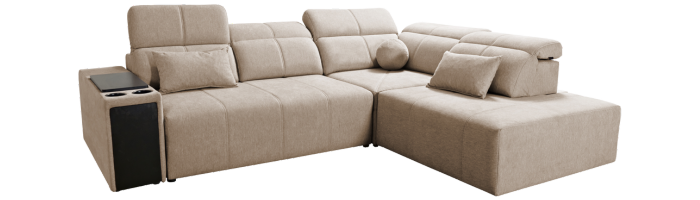
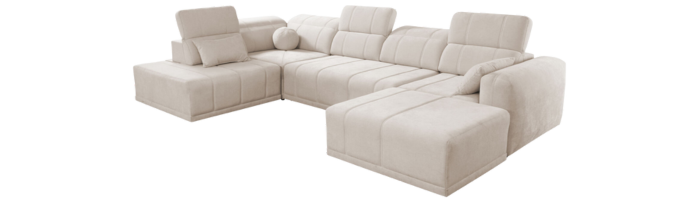
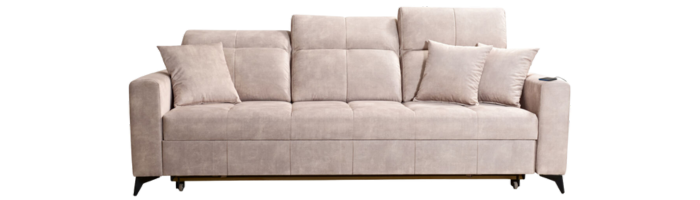


The canapé home cinéma is no ordinary sofa. It has to hold its own next to a 65-inch screen or larger, a 5.1 or Dolby Atmos sound system, three-hour sessions where no one moves, and often a room plunged into near-darkness. It's a sofa that earns its place: a deep seat that isn't too soft, a tall backrest to support your neck, armrests at the right height for resting a game controller, and a sober colour palette that won't bounce the screen's light back at you. Our selection at Kings Canapé brings together every model that passes these requirements — from XXL panoramic sofas for large families to corner sofas that make the most of the space in a rectangular living room.
What a home cinema sofa is — and why it has nothing in common with a classic sofa
A canapé home cinéma has to meet very specific technical demands, dictated by long sitting sessions and life alongside a screen. The recommended eye-to-screen distance is 1.5 to 2.5 times the TV's diagonal: for a 65" screen, that means 2.5 to 4 metres. The sofa must sit at exactly that distance, without overwhelming the room. Its seat depth needs to be generous (60 to 75 cm) so you can sprawl in a semi-reclined position, but not so deep that the backrest becomes useless. Its backrest needs to be tall enough (65 to 80 cm) to support your head when you doze off during a film. Its armrests need to sit at the right height (22 to 28 cm above the seat) so you can rest your arms without hunching your shoulders.
The 5 non-negotiable technical criteria
A successful sofa for home cinema ticks five boxes. First, seat depth: 60 to 70 cm for cinephile comfort, up to 75 cm if you love a fully reclined position. Second, backrest height: at least 65 cm, ideally 75 cm if you're over 1.75 m tall. Third, seat firmness: not too soft (you sink in and struggle to stand up), not too firm (uncomfortable after 3 hours). Fourth, colour: dark grey, black, midnight blue, or navy blue — dark shades avoid reflections on the screen. Fifth, upholstery durability: no long-pile velvet (which traps dust and pet hair), but rather microfibre, structured fabric or leather.
The trap of the over-comfortable sofa
The great paradox of the canapé home cinéma is that a sofa that is too comfortable becomes uncomfortable after two hours. The seat that sags under your weight, the backrest that no longer supports you, the cushions that lose their shape — all of this turns a film session into lower-back torment. That's why sofas with a firm seat are over-represented in our home cinema selection. Firmness is the promise of a session that lasts without pain.
The configurations that work: panoramic, corner or straight
The configuration you choose depends on the geometry of the room and the number of users. Here are the three main options, with their advantages and limits in a home cinema context.
The panoramic: the cinema configuration par excellence
The panoramic sofa in U or extended L shape seats five to seven people facing a central screen or projection system. It's the king configuration of dedicated home cinema rooms: everyone sees the screen, the surround sound envelops the room, and immersion is total. For a standard living room of 25 to 35 m², a 5- to 7-seat panoramic is enough. For a proper dedicated room, aim for 7 to 9 seats. Watch out: a panoramic takes up a lot of floor space — count on 2.5 to 3 metres of linear length for a 5-seat model.
The corner sofa: the smart compromise
For rectangular rooms or more modest living spaces (15 to 25 m²), the corner sofa is often the best option. It structures the room by clearly defining the TV area, and the chaise naturally creates a "star" spot for the main cinephile. Reversible models let you place the corner on the left or right depending on the layout. It's also a good configuration for families that mix TV and reading in the same room.
The straight sofa: for narrow rooms
The straight sofa finds its place in long, narrow living rooms where the screen sits at one end. It sits perpendicular to the TV axis and lets you keep the optimal eye-to-screen distance. It's also the right configuration if you want a quality home cinema sofa without taking over the whole living space. For really narrow rooms, a 3-seater is enough; for true cinephile comfort, aim for 4 to 5 seats.
Materials that absorb light and stand the test of time
The upholstery of a canapé home cinéma has to juggle two opposing demands: absorb light (to avoid stray reflections) and withstand intensive use (3-hour sessions, popcorn, drinks, fiddling). Materials fall into three families based on their performance.
Microfibre fabric and textured polyester
The microfibre sofa is the ideal compromise for home cinema. A peach-skin touch, total light absorption (no reflection on the screen), impressive stain resistance, and easy care. High-end versions come with a stain-resistant treatment that makes liquids bead up — a spilled glass of soda wipes off in a single sweep of a cloth. It's also the cheapest material to maintain over the long term.
Leather, king of absorption
Leather is the noble material of home cinema. Full-grain leather absorbs light without the slightest reflection, ages beautifully, and becomes more comfortable over time. Be wary of temperature, though: in summer, leather can feel sticky; in winter, it feels cold. Faux leather is a more affordable alternative, but its lifespan is shorter (5–7 years versus 15–20 years for real leather).
Ribbed velvet, discreet chic
Ribbed velvet (with fine ridges) is the secret of high-end home cinemas. It absorbs light like no other fabric, gives exceptional depth of colour, and brings a very successful "darkened screening room" cinema touch. Long-pile velvet, on the other hand, is best avoided: it traps dust and marks at every press of a finger. Stick with short-pile or ribbed velvet for a clean look.
The ideal layout for the home cinema room
A canapé home cinéma is nothing without a thoughtful layout. Here are the four principles that make the difference between an amateur setup and a real home cinema room.
Eye-to-screen distance
Golden rule: 1.5 to 2.5 times the diagonal of your screen. For a 55", aim for 2.2 to 3.7 metres. For a 65", 2.5 to 4 metres. For a 75" and above, you need a dedicated room. Beyond that, eye fatigue sets in; short of that, the pixels become visible and immersion is lost.
Positioning the sofa relative to the speakers
For a 5.1 system, the sofa should sit at about 60% of the room's length from the screen. This places viewers at the centre of the optimal listening area, where the surround effects are most enveloping. For a Dolby Atmos 7.1.4, centring is even more critical — a 20 cm offset is enough to degrade the experience.
Managing the light
A canapé home cinéma must be placed in the darkest zone of the room. If you can't darken the space completely, opt for a dark sofa (dark grey, black, midnight blue) rather than a light one, which will reflect the light. Anthracite grey sofas are the sensible choice: they absorb light without weighing down the room visually.
Storage and connectivity
A home cinema worthy of the name needs hidden storage for remote controls, headphones and cables. Choose sofas with a built-in storage compartment in the chaise or under the seat. Versions with USB ports are a bonus for charging controllers and tablets without multiplying the cables.
Budget and value for money
The price of a canapé home cinéma depends less on style than on durability and lasting comfort. Here are the benchmarks for investing wisely.
Entry level (€1,000–€1,800)
You'll find sofas between €1,000 and €2,000 in microfibre fabric, with a panel structure and high-density polyether foam. Honest comfort for 2-hour sessions, with a lifespan of 5–7 years. Ideal for first-time buyers who want to kit themselves out without blowing their budget.
Mid range (€1,800–€3,500)
This is the heart of the Kings Canapé range, and the sweet spot for a family home cinema. A solid wood frame, HR (high-resilience) foam at 35 kg/m³, a firm seat, and microfibre or leather upholstery. Mid-range comfortable sofas offer the best value for money for intensive use (10–15 years).
High end (€3,500 and up)
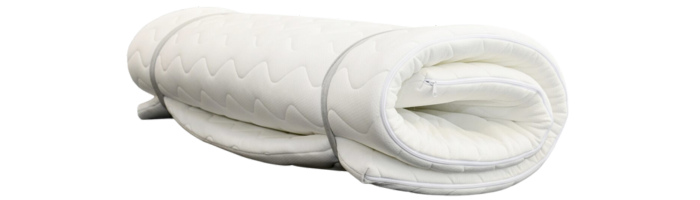
For purists: a solid beech frame, Nosag springs, down-feather seat and full-grain leather. Kings Canapé's luxury sofas in this range are lasting investments (15–20 years minimum). The integrated topper, the electric recliner and motorised recliners are the options that make the difference for a premium home cinema.
Frequently asked questions about the canapé home cinéma
What size sofa for a 65-inch screen?
For a 65-inch screen, the recommended viewing distance is 2.5 to 4 metres. In a standard living room, a 5-seat panoramic sofa or a 4- to 5-seat corner sofa offers the best compromise. For a truly cinematic experience, a 6- to 7-seater is ideal. Avoid going below 3 seats: you'll lose the "screening room" feel.
Should the sofa face the TV directly or be offset?
Facing it, ideally centred on the screen. For a 5.1 system, the sofa needs to be centred on the optimal listening point (the "sweet spot"). If the room doesn't allow this centring, offset the sofa and adjust the screen angle rather than the other way round. An offset of 30° is tolerable; beyond that, visual fatigue sets in.
What colour of sofa should I choose so it doesn't reflect the light?
Matte and dark shades are your allies: anthracite grey, black, midnight blue, navy blue, forest green. Avoid light colours (white, beige, pale yellow), which reflect the light from the screen and create stray reflections. Dark grey is the go-anywhere colour: it absorbs light while still being easy to fit into a classic living room.
Do I need a recliner or a sofa bed for home cinema?
A recliner isn't essential, but it really makes a difference over long sessions. An electric recliner sofa lets you tilt the backrest and extend the footrest to reach the ideal semi-reclined position. A sofa bed, on the other hand, is rarely useful in a pure home cinema setup: it's better to favour a deep seat from the start.
How do I protect my canapé home cinéma from stains (popcorn, soda)?
Three habits: choose a water-repellent sofa from the moment of purchase (the fabric is treated in the factory), lay a dark throw or blanket over the seat during sessions, and clean any fresh stain immediately with a damp cloth (don't rub). For standard-fabric sofas, applying a waterproofing spray every two years extends the protection.
Conclusion: the sofa that changes everything
A well-chosen canapé home cinéma turns a simple TV session into an experience. It's not just a question of size or colour: it's a combination of technical details (seat depth, backrest height, firmness, stain-resistant treatment) that make the difference between a sofa you look at and a sofa you live on. At Kings Canapé, we've selected models that bring these criteria together, whatever your budget. The right canapé home cinéma is the one you stop noticing because it becomes the natural extension of the screen and the sound. If you want to turn your living room into a mini screening room, start with the sofa.